
Sleep Science
Rest Architecture and the Metabolic Continuum
Eleanor Marsden
·
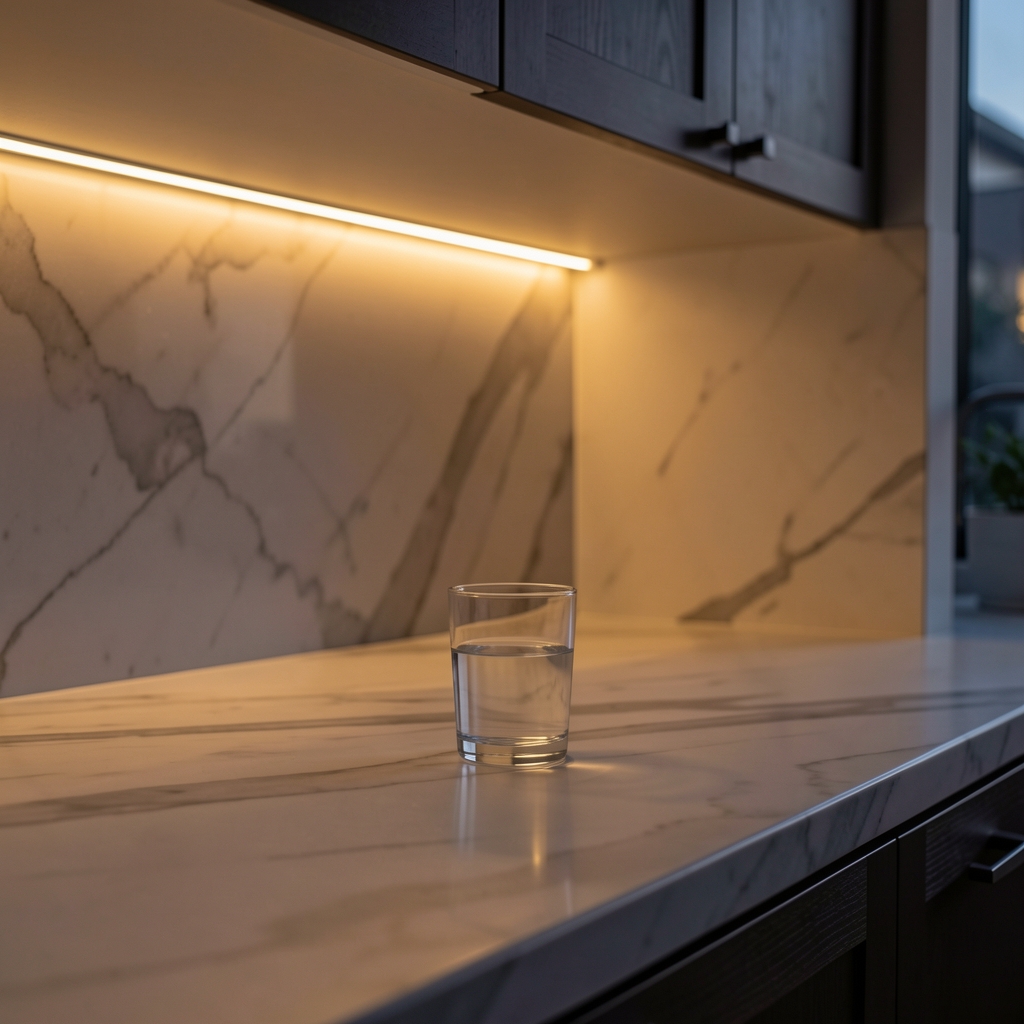
There is a particular quality to the late evening that makes it both the most consequential and the least examined part of the daily rhythm in body composition coaching. Clients frequently arrive with detailed food logs covering breakfast through early dinner and then a broad silence — or a brief, somewhat apologetic mention — covering everything that happened after nine o'clock. The evening hours, it turns out, often contain the decisions that most reliably predict how the following morning begins.
The two to three hours before bed represent a biological transition period. Core body temperature begins to fall. Melatonin secretion — dependent on the ambient light environment — initiates the cascade of signals that prepare the body for the first sleep cycle. Hunger regulation at this point in the day behaves differently from hunger experienced in the morning or midday. It is more susceptible to environmental cues, emotional state, and the presence of food within visual or olfactory range.
Published nutritional research has documented the phenomenon of evening appetite as structurally distinct from daytime hunger: individuals presented with the same caloric options in the morning versus the evening consistently show different selection patterns, with evening choices trending towards higher palatability regardless of reported fullness. This has been observed across age groups and is not significantly attenuated by awareness of the pattern — knowing one tends to eat more in the evening does not, by itself, reliably change the behaviour.
The practical question for body composition work, therefore, is not simply whether someone eats in the evening — for most people on a realistic schedule, some form of evening intake is unavoidable — but what the structure of the evening environment looks like, and whether that structure supports or undermines the biological preparation for rest.
"The kitchen, it turned out, was a more powerful variable than the meal plan. The client who could not stop the evening snacking had a beautifully designed open-plan kitchen visible from the sofa."
— Coaching observation note, 2025
The relationship between evening light exposure and sleep onset time is among the most consistently documented in circadian biology. Short-wavelength blue light — the spectrum dominant in screens, LED overhead lighting, and energy-saving bulbs — signals the suprachiasmatic nucleus to suppress melatonin release. The effect is not metaphorical: it pushes back the sleep window by a measurable amount.
A delayed sleep onset, when the wake time is fixed by work or family obligations, produces a shortened sleep window. A shortened window disproportionately affects the later cycles of the night — the ones richest in REM. And shortened REM, as detailed in the previous field note in this series, is associated with elevated appetite signals the following day.
The chain of consequence is therefore: bright evening light → delayed melatonin → shortened sleep window → reduced REM → elevated morning appetite → higher likelihood of unplanned intake the following day. This chain operates almost entirely outside conscious awareness. Most individuals who experience it would describe themselves as simply finding it difficult to sleep and often hungry in the morning — without any sense that the overhead lighting in their living room the night before is a contributing variable.

Evening environment observation — the lighting context preceding sleep onset.
Among the coaching interventions tested for managing evening intake, the kitchen-closing routine consistently outperformed approaches based on willpower or tracking. The mechanism is environmental rather than cognitive: when the kitchen is genuinely unavailable — lights off, bench cleared, nothing accessible without deliberate effort — the frequency of unplanned evening intake drops sharply in the first two weeks of implementation.
In coaching practice, this was implemented as a fixed kitchen-closing time: typically 20:30 or 21:00 depending on the individual's schedule. The kitchen was treated as a workspace — used, then closed — rather than as a continuous ambient presence. Clients were asked to mark the closure physically: wiping down the bench, turning off the lights, putting away any visible snack items. The physical act of closing appeared to create a categorical shift in the evening context rather than relying on ongoing resistance to temptation.
Over ten weeks of observation across seven clients with consistent evening-snacking patterns, kitchen-closing produced an average reduction in reported post-20:30 intake frequency from four to five evenings per week to one to two evenings per week. The clients who had difficulty maintaining the routine shared a common domestic architecture factor: an open-plan layout where the kitchen was continuously visible from the primary evening seating area.
The character of the final meal of the day — not just its caloric content but its pacing, setting, and level of attentiveness — has a documented relationship to post-meal satiety duration. Meals eaten quickly, in front of screens, or while managing other tasks produce lower satiety scores at two hours post-meal compared with the same meal eaten slowly and without distraction.
This difference in satiety duration is particularly relevant in the evening because the gap between the final meal and the next morning's breakfast is the longest food-free period of the day for most people. A final meal that leaves a person genuinely satisfied for three to four hours — covering the pre-sleep window and the sleep period itself — requires no additional evening intake. A final meal that leaves them somewhat unsatisfied at ninety minutes creates the conditions under which the kitchen-closing protocol is most tested.
In practice, structured eating at the final meal — seated, without screen engagement, paced over at least fifteen to twenty minutes — consistently produced more stable reports of pre-sleep hunger scores. The satiety was not driven by caloric increase but by the improved registration of the meal's fullness signals. Slower eating allows the circadian satiety signalling sufficient time to reach the relevant receptors before the meal is complete. It is one of the most straightforward and evidence-informed adjustments available in daily practice.
The morning that follows a well-managed evening — lower light exposure from 20:30, a genuine kitchen closure, a paced final meal — has a measurably different character than the morning following a disrupted one. Clients who maintained the evening protocol for three or more consecutive nights consistently described their morning appetite as "clearer" or "more manageable." The impulse to eat immediately on waking, which many reported as automatic and somewhat anxious, was replaced by a more deliberate relationship to the first meal.
Morning energy ratings — measured on a self-report scale of 1 to 10 at first waking — averaged 1.4 points higher following three-night protocol streaks than following three nights without the protocol. The subjective experience of the morning was different enough that several clients began to describe the evening routine not as a restriction but as a preparation. This reframing — from "what I am not allowed to do in the evening" to "how I set up the following day" — proved to be a significant factor in long-term adherence.
The daily movement and rest balance equation, often discussed in terms of exercise protocol, is as much about what precedes and follows the night's rest as about the rest itself. An evening that supports good sleep onset and architecture creates a morning that is more likely to involve spontaneous physical activity, better food selection, and higher reported satisfaction with daily progress — compounding across weeks and months into the sustained trajectory that characterises successful body composition work.
Articles published on Sorel Field Notes are editorial in nature and reflect the writers' observations on everyday wellness practices. The content is not intended as professional advice, nor as guidance for the management of any specific condition. Readers with specific concerns about their daily routines are encouraged to speak with a qualified wellness professional.

Eleanor Marsden is the primary editor and founding observer of Sorel Field Notes. Her writing draws on structured client observation records from a decade of one-to-one wellness coaching, with a particular focus on the evening and morning patterns that most reliably predict long-term progress.
More from Eleanor Marsden →